Langdon's Housing: Older Roots, Newer Growth
Langdon began as a Canadian Pacific Railway settlement in the early 1880s, when a station was established in a boxcar near the line east of Calgary. The central part of the hamlet still follows that railway-era grid and contains some of the community's older dwellings. Around that core, Langdon expanded through low-density residential subdivisions beginning in the late twentieth century, and a substantial share of today's housing was built after 2000.
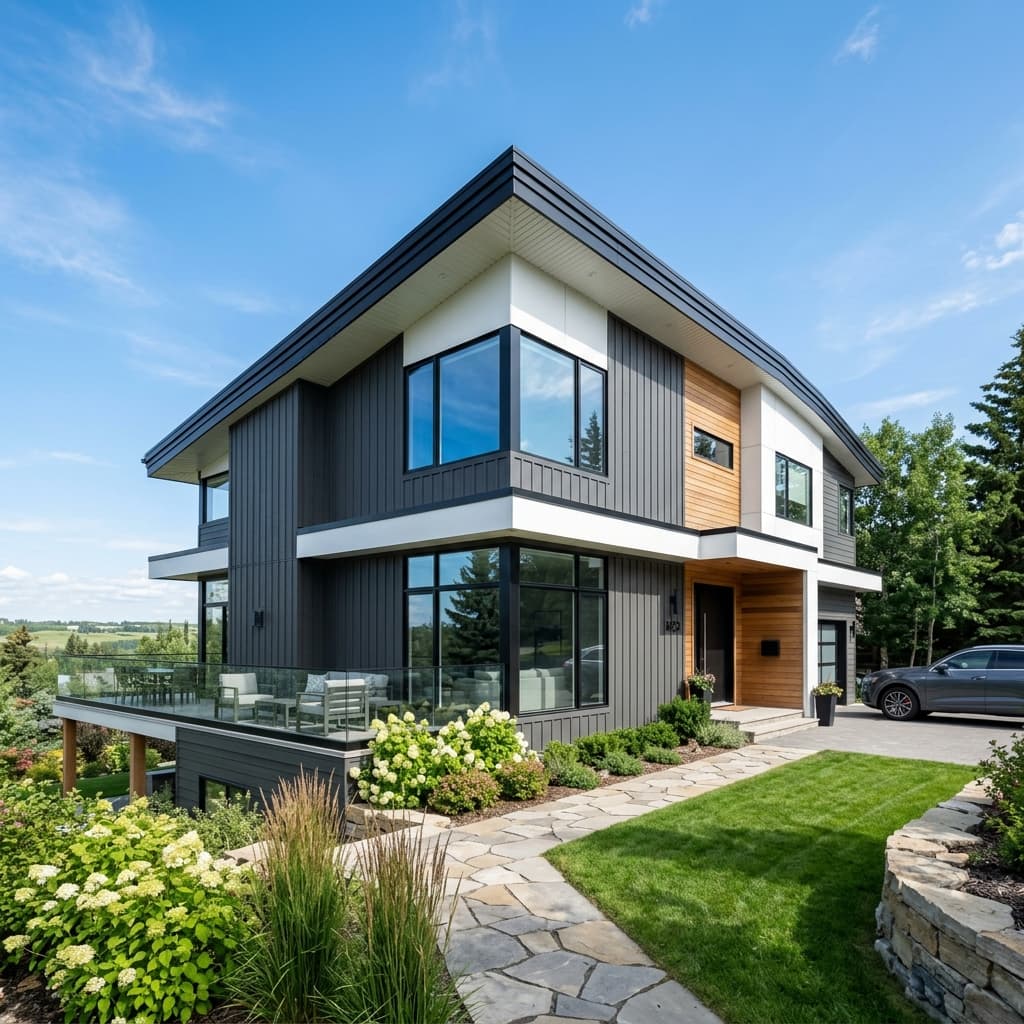
Recent development has concentrated in master-planned areas such as The Bridges of Langdon, Settler's Green and Painted Sky, alongside established areas like Langdon Crossing West, Langdon Meadows and Boulder Creek. The residential character is dominated by single-detached houses, with semi-detached homes and selected row houses in some developments.
Flat Terrain, Snowmelt and Seasonal Drainage
Langdon sits on generally level prairie at roughly 1,005 metres above sea level. The landscape includes cultivated land, wetlands and stormwater infrastructure, and the flat terrain means drainage is heavily influenced by snowmelt, intense rainfall and the capacity of subdivision stormwater systems. The area's documented profile includes localized overland-flooding and drainage exposure.
For basement painting, this context is relevant for one specific reason: a wall or floor can show staining, efflorescence or adhesion problems that have nothing to do with the age of the paint. A substrate and moisture-condition review before coating helps determine whether the surface is ready to paint or whether the underlying condition needs separate attention.
Climate and How Basements Are Used
The Calgary region experiences frequent seasonal freeze-thaw cycles and periodic extreme cold, and Langdon in particular sits under regional Chinook influence that can produce rapid winter temperature changes. Hail-producing thunderstorms are a documented regional hazard. These conditions push much of family life indoors, and basements in Langdon often function as year-round recreation rooms, home offices, guest bedrooms and children's play areas.
That pattern of use favours washable, durable finishes and, in occupied homes, low-odour or low-VOC coating options. It also means a basement repaint should be planned to fit the household's routine rather than treated as a quick refresh.
What Basement Painting Involves in Langdon
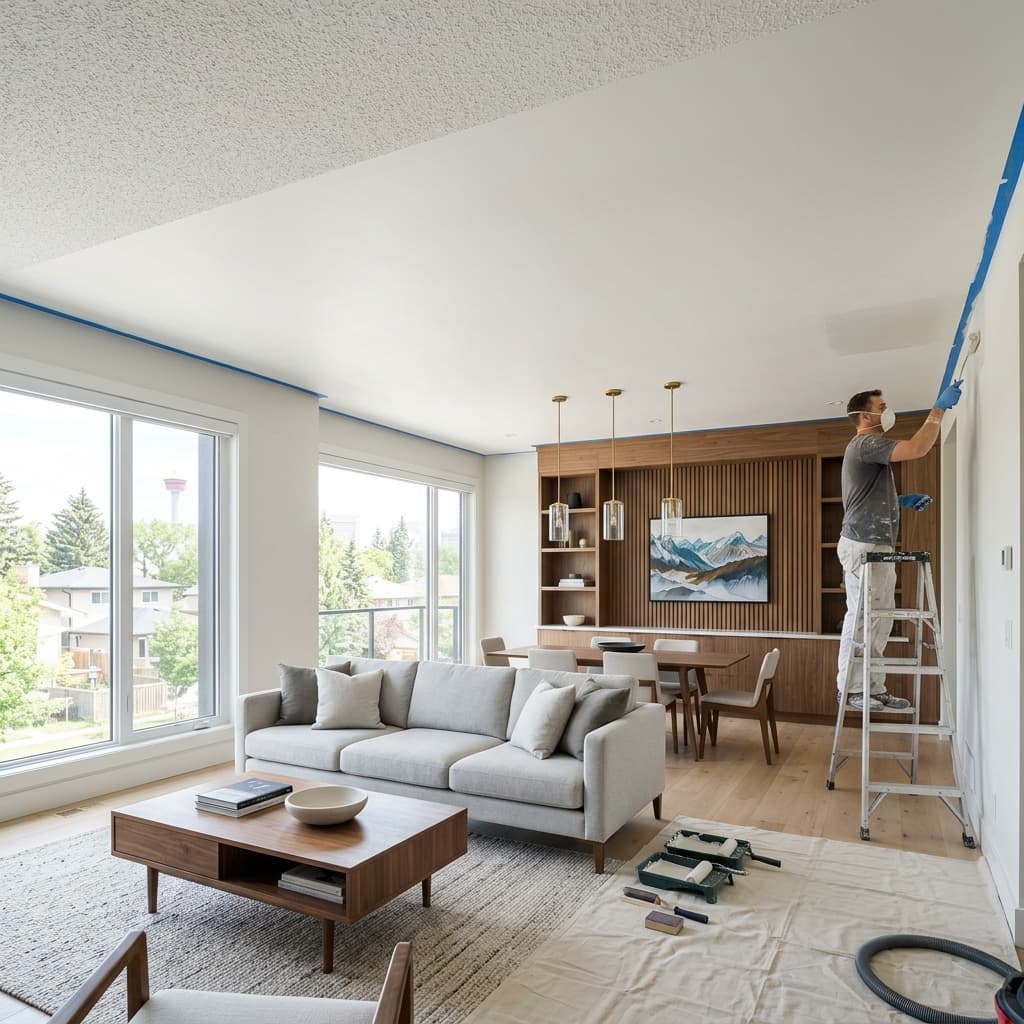
Brixel Painting is a Calgary-based painting contractor whose core approach is preparation-first painting with detailed, itemized project scoping. For basements, the technical process typically moves through surface inspection, localized drywall and plaster correction, sanding with dust control, caulking at trim transitions, masking and property protection, primer where required, finish-coat application and a final walkthrough.
1. Substrate and Moisture Review
Before coating, the condition of the surfaces should be checked. In a Langdon basement, that means looking at drywall for popped joints or water staining, concrete for efflorescence or dampness indicators, and trim for damage or old failing coatings. The documented drainage context of the hamlet makes this step a practical part of the scope — not because every basement has a moisture problem, but because identifying one early changes the entire approach.
2. Repair, Sanding and Priming
Localized drywall and plaster repair is part of preparing a basement for paint. Sanding is done with dust control, which matters in finished lower levels where belongings and furniture may stay nearby. Joint and trim caulking helps clean up transitions, and a substrate-specific primer improves adhesion before finish coats are applied.
3. Finish Selection for Basement Use
Basement spaces in a family-oriented hamlet like Langdon tend to see hard use. Washable finishes are a common choice for walls in recreation rooms and bedrooms, and low- or zero-VOC options are part of the coating conversation where the space is occupied during the work. The right system depends on the substrate, the light levels and how the room is used.
What Basement Painting Does Not Do
Painting does not replace structural repair, does not correct active leaks, is not waterproofing and is not mould remediation. If a basement shows signs of dampness, musty odours or foundation movement, those conditions should be investigated separately before any coating work. This boundary is part of responsible project scoping.
Matching the Service to Langdon's Housing Mix
The combination of older central housing and substantial post-2000 subdivisions creates two common basement painting scenarios in Langdon. In newer areas such as The Bridges of Langdon, Settler's Green and Painted Sky, homeowners may want to replace builder-applied flat paint with a more durable, washable finish. In the older railway-era core, preparation often plays a larger role: more patches, more sanding, more attention to what previous coatings are hiding. Both scenarios benefit from a clear scope and a preparation-first process.
Working With Brixel Painting
Brixel states that it is licensed, insured and WCB-covered, and stands behind its work with a 2-Year Workmanship Warranty. For a basement project, the practical first step is to request a free estimate or schedule a site review to discuss the condition of the space, the coating options and how the work can be timed around the household's routine.
Explore Nearby Langdon Areas